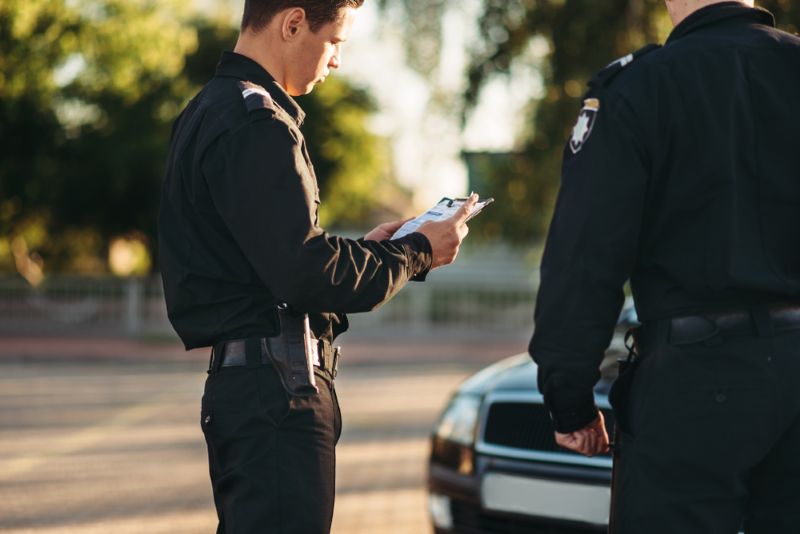
Missouri legalized recreational marijuana for adults 21 and older in 2022, but that does not mean marijuana-related traffic stops are always straightforward. Drivers in Springfield may wonder whether a police officer can search their vehicle simply because they claim to smell marijuana.
The answer depends on the circumstances. Missouri's legalization amendment changed how marijuana odor factors into vehicle searches, but it did not eliminate every situation in which police may search a car without a warrant. Understanding your constitutional rights can make a significant difference if evidence discovered during a traffic stop leads to criminal charges.
Does the Smell of Marijuana Give Police Probable Cause to Search a Car?
Before recreational marijuana became legal in Missouri, officers frequently relied on the odor of marijuana as evidence supporting probable cause to search a vehicle.
However, Missouri's legalization amendment changed the legal framework.
Article XIV, Section 2 of the Missouri Constitution states that the odor of marijuana or burnt marijuana, standing alone, does not constitute probable cause to search a person's home, vehicle, or other private property.
This means a Springfield police officer generally cannot justify a vehicle search solely by stating that they smelled marijuana.
However, the constitutional protection does not mean marijuana odor is irrelevant in every investigation.
Police may consider other facts that independently support probable cause or another recognized exception to the warrant requirement.
For example, evidence of impaired driving, illegal distribution, or another criminal offense may affect whether a search is lawful.
Our Springfield drug crime defense attorneys can evaluate the circumstances of a vehicle search and determine whether officers had a legally sufficient basis to conduct it.
What Does Missouri's Marijuana Legalization Law Allow?
Missouri permits qualifying adults age 21 and older to possess limited amounts of marijuana for personal use under state law.
The state's legalization amendment generally allows adults to possess up to three ounces of marijuana, subject to applicable restrictions.
However, legalization did not remove all marijuana-related offenses.
Conduct that may still result in legal consequences includes:
- Possessing marijuana in amounts exceeding applicable legal limits
- Distributing marijuana outside authorized channels
- Operating a motor vehicle while impaired by marijuana
- Possessing marijuana in circumstances prohibited by law
- Violating restrictions applicable to minors
- Engaging in conduct involving other illegal controlled substances
For Springfield drivers, the distinction between lawful possession and evidence of criminal activity is particularly important.
An officer who detects marijuana odor may investigate possible violations, but the odor alone cannot establish probable cause for a vehicle search under Missouri's constitutional provision.
When Can Police Search Your Vehicle Without a Warrant?
The Fourth Amendment to the United States Constitution and Article I, Section 15 of the Missouri Constitution protect individuals against unreasonable searches and seizures.
Although warrants are generally required for many searches, courts recognize several exceptions.
During a Springfield traffic stop, officers may be able to search a vehicle without a warrant under certain circumstances.
The Automobile Exception
Under the automobile exception, police may search a vehicle without a warrant when they have probable cause to believe it contains evidence or contraband associated with criminal activity.
However, marijuana odor alone does not satisfy that standard under Missouri's legalization amendment.
Officers must rely on additional legally sufficient circumstances.
For example, an officer who observes evidence of illegal drug distribution may have grounds to investigate further.
Whether those observations establish probable cause depends on the totality of the circumstances.
Consent Searches
Police may ask a driver for permission to search a vehicle.
If the driver voluntarily consents, officers may conduct a search within the scope of that consent.
However, drivers generally have the right to decline a request for consent when officers lack another lawful basis to search.
Refusing consent does not, by itself, establish probable cause.
Searches Following an Arrest
Police may conduct certain vehicle searches incident to a lawful arrest, but this authority is limited.
Under applicable constitutional rules, officers cannot automatically search an entire vehicle simply because an occupant has been arrested.
The circumstances of the arrest, the arrestee's access to the vehicle, and the potential presence of evidence related to the offense may affect the analysis.
Inventory Searches
When police lawfully impound a vehicle, they may conduct an inventory search under standardized departmental procedures.
An inventory search must serve legitimate administrative purposes rather than operate as a pretext for an otherwise unlawful investigative search.
Can Police Search Your Car if They Suspect Marijuana Impairment?
Suspected marijuana impairment can create legal issues distinct from possession.
Although Missouri permits qualifying adults to possess marijuana, driving while intoxicated by marijuana remains illegal.
Under Missouri Revised Statutes § 577.010, a person commits driving while intoxicated when operating a vehicle while in an intoxicated condition.
This includes impairment caused by drugs.
For example, a Springfield officer may stop a driver after observing repeated lane departures and delayed responses to traffic signals.
If the officer also notices marijuana odor, the investigation may involve suspected drug-impaired driving.
However, the smell of marijuana does not automatically prove that the driver is impaired.
Officers may rely on additional observations, statements, field sobriety testing, or other evidence.
The legality of any subsequent vehicle search depends on whether an applicable exception to the warrant requirement exists.
Our Springfield DWI defense attorneys can review both the impaired driving allegations and the evidence obtained during the traffic stop.
Can Police Search Your Car if Marijuana Is Visible?
Visible marijuana does not automatically establish criminal activity because possession may be lawful under Missouri law.
However, the surrounding circumstances matter.
For example, an officer who sees a small amount of marijuana in a vehicle occupied by an adult may not have the same basis for further action as an officer who observes evidence suggesting unlawful distribution.
Police may also investigate suspected impairment or other violations when additional facts support that investigation.
For Springfield motorists, the key issue is whether the officer can identify legally sufficient evidence of unlawful conduct.
Courts may examine the quantity involved, the officer's observations, and other circumstances when determining whether probable cause existed.
What Should You Do if Police Ask to Search Your Car?
If a police officer requests permission to search your vehicle during a Springfield traffic stop, remaining calm is important.
Drivers should avoid physically resisting officers, even when they believe a search is unlawful.
Practical steps include:
- Keep your hands visible and follow lawful instructions.
- Provide your driver's license, registration, and proof of insurance when required.
- Ask whether the officer is requesting consent to search.
- Clearly and respectfully state that you do not consent if you wish to decline.
- Avoid making unnecessary statements about marijuana use or possession.
- Do not attempt to hide, destroy, or move evidence.
- Remember the circumstances of the encounter for discussion with an attorney.
You can generally refuse consent to a voluntary search, but officers may still proceed if they believe another lawful justification exists.
Whether that justification is valid can be challenged later through the legal process.
What Happens if Police Find Drugs During an Illegal Vehicle Search?
If police conduct a vehicle search that violates constitutional protections, evidence obtained during the search may be subject to suppression.
A motion to suppress asks the court to exclude evidence obtained through an unlawful search or seizure.
For example, suppose a Springfield officer searches a vehicle based solely on marijuana odor and discovers another controlled substance.
If the search violated Missouri's constitutional protections and no other lawful exception applied, the defense may seek to suppress the evidence.
However, suppression is not automatic.
The court must evaluate the facts, applicable constitutional rules, and any relevant exceptions.
In some cases, excluding critical evidence can substantially weaken the prosecution's case.
In others, prosecutors may possess additional evidence that is not affected by the challenged search.
Can Police Extend a Traffic Stop to Investigate Marijuana?
Police generally cannot prolong a traffic stop beyond the time reasonably necessary to address its original purpose without additional legal justification.
Under Fourth Amendment principles, officers typically need reasonable suspicion of other criminal activity to extend the detention for an unrelated investigation.
For example, an officer in Springfield who stops a driver for a broken taillight cannot automatically extend the encounter indefinitely to investigate marijuana possession.
Because marijuana odor alone does not establish probable cause for a vehicle search in Missouri, the officer must consider whether other facts legally justify additional investigative actions.
The analysis may differ depending on whether officers suspect impaired driving, unlawful possession, distribution, or another offense.
A defense attorney can examine police reports, body camera footage, and the timeline of the stop to determine whether the detention was unlawfully extended.
How Can a Criminal Defense Attorney Challenge a Marijuana-Related Vehicle Search?
A successful defense often begins with examining the details of the traffic stop.
Important questions may include:
- Did the officer have a lawful reason to stop the vehicle?
- Was the search based solely on marijuana odor?
- Did the officer observe additional evidence of criminal activity?
- Did the driver voluntarily consent to the search?
- Was the detention extended without sufficient justification?
- Did officers exceed the lawful scope of the search?
- Were constitutional rights violated during the investigation?
For Springfield residents facing drug possession, distribution, or DWI charges, these issues may affect whether the prosecution can use evidence obtained from the vehicle.
Even when police discover contraband, the legality of the search remains a separate and important question.
Speak With Springfield Criminal Defense Attorney Steven F. Groce
Missouri's marijuana legalization law provides important protections against vehicle searches based solely on marijuana odor. However, officers may still conduct searches when additional circumstances establish a lawful basis.
If you are dealing with drug charges, a marijuana-related traffic stop, or allegations involving an unlawful vehicle search in Springfield, attorney Steven F. Groce is here to help. Call today or connect with our office online to schedule a consultation.