A boating while intoxicated investigation does not necessarily begin with an accident or obviously dangerous boating behavior. Law enforcement officers patrol Missouri waterways and may encounter boat operators through safety-related stops, observed boating activity, complaints, accidents, or other interactions on the water.
Once an officer suspects that an operator may be intoxicated, the encounter can develop into a BWI investigation.
Depending on the circumstances, law enforcement may consider:
- How the vessel was being operated before the encounter;
- Statements made by the operator or passengers;
- The presence or odor of alcoholic beverages;
- Physical observations officers associate with intoxication;
- The operator's balance, coordination, or speech;
- Evidence of alleged drug use;
- Performance on sobriety or impairment-related exercises; and
- Breath, blood, or other chemical evidence.
The circumstances leading to the encounter can be important when evaluating a BWI case. An investigation following a boating accident may develop differently from one that begins during a routine interaction on a busy recreational lake.
The environment can matter as well. A day spent boating on Table Rock Lake or another Southwest Missouri waterway can involve prolonged exposure to sun, heat, wind, waves, and physical activity. Those conditions do not prevent law enforcement from investigating suspected intoxication, but they can provide important context for observations made during the encounter.
The prosecution must still rely on evidence to establish that the person accused of BWI was operating the vessel while intoxicated. The fact that alcohol was present aboard a recreational boat does not, by itself, answer that question.
A Missouri boating while intoxicated attorney can evaluate the circumstances surrounding the law enforcement encounter and the evidence prosecutors intend to use. Like other criminal charges, a BWI allegation should be considered based on what occurred in the individual case rather than assumptions about why people were drinking or what officers believed when the investigation began.
Field Sobriety Testing in a Boating While Intoxicated Case
Sobriety testing can present unique considerations in a boating environment. Traditional roadside DWI investigations generally occur after a driver has been sitting in a vehicle and then steps onto relatively stable ground. A person who has been aboard a boat may have spent hours adjusting to continuous motion from waves, wakes, and changing water conditions.
That does not mean field sobriety evidence from a BWI investigation is automatically unreliable. It does mean that the circumstances surrounding testing can be relevant when evaluating what a person's performance actually demonstrates.
Factors that may affect observations during a boating investigation include:
- Waves and movement aboard the vessel;
- Recent exposure to continuous boat motion;
- Heat and prolonged sun exposure;
- Dehydration;
- Physical fatigue after swimming or other recreational activity;
- Uneven, wet, or unstable surfaces;
- Footwear or the lack of footwear;
- Preexisting physical limitations; and
- The location and conditions under which testing occurred.
For example, an officer may interpret difficulty balancing as evidence consistent with intoxication. In a boating case, however, the conditions surrounding that observation may deserve consideration. A person stepping off a moving boat after hours on the water is experiencing circumstances different from someone stepping out of a vehicle onto level pavement.
Other observations may also be considered alongside sobriety exercises. Officers may describe a person's speech, eyes, coordination, behavior, or ability to follow instructions. Available video can provide additional evidence of what occurred during the encounter.
A Missouri BWI lawyer can evaluate sobriety-testing evidence in the context of the entire investigation. Environmental factors do not automatically defeat a BWI allegation, but neither should the realities of being on the water be ignored when physical observations form part of the prosecution's case.
Breath and Blood Testing in Missouri BWI Cases
Chemical testing may become an important part of a Missouri boating while intoxicated case. Depending on the circumstances, law enforcement may seek breath, blood, or other evidence to support an allegation that a boat operator was intoxicated by alcohol or drugs.
A reported chemical test result can be significant evidence, but it should be considered alongside the circumstances surrounding the investigation. Relevant questions can involve the type of test administered, when testing occurred, and how the result relates to the time the person was allegedly operating the vessel.
Chemical evidence may be considered together with:
- Officer observations;
- Statements concerning alcohol or drug consumption;
- Sobriety-testing evidence;
- Video or witness accounts;
- The timeline of the boating activity and investigation;
- Evidence concerning prescription or controlled substances; and
- The circumstances of any boating accident.
Drug-related BWI allegations can present different evidentiary questions from an alcohol-based case. Unlike an alcohol investigation centered on a reported BAC, allegations involving drugs may depend on the substance involved, chemical testing, officer observations, and other evidence concerning alleged impairment.
Questions can also arise when an operator is accused of refusing requested chemical testing. The legal consequences and issues surrounding an alleged refusal depend on the circumstances and applicable Missouri law, so a refusal should not simply be treated as identical to a failed test.
Chemical evidence can be important, but a BWI prosecution is not reduced to a single number or test result. A Missouri boating while intoxicated attorney can consider that evidence together with the operation of the vessel, officer observations, environmental conditions, and the other facts surrounding the allegation.
What Are the Penalties for Boating While Intoxicated in Missouri?
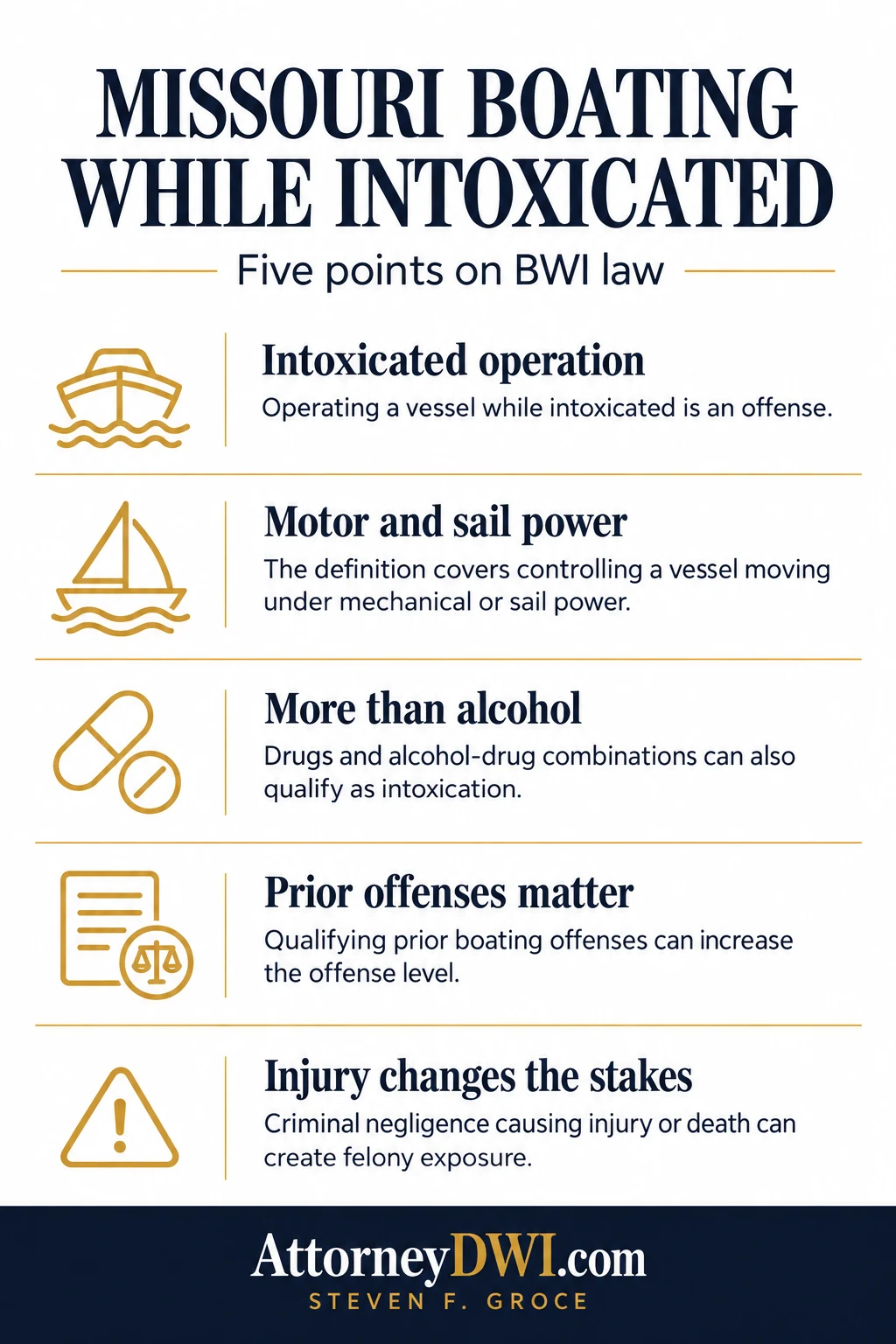
A boating while intoxicated conviction can result in serious criminal consequences. The penalties depend on the classification of the offense, the defendant's prior history, and whether the incident involved circumstances that make the charge more serious.
Potential consequences of a Missouri BWI conviction can include:
- Jail or incarceration in more serious cases;
- Fines and court costs;
- Probation and other court-imposed conditions;
- Alcohol- or substance-related treatment requirements where applicable;
- A criminal record;
- Increased consequences for qualifying repeat offenses; and
- More serious criminal exposure when an intoxicated-boating incident involves injury or death.
The potential consequences make it important to determine the exact charge rather than assuming every BWI allegation carries the same penalties. A first allegation arising from a recreational boating encounter may present a very different situation from a repeat offense or a case involving a serious collision.
A conviction can also create consequences outside the immediate sentence. A criminal record may affect employment, professional opportunities, background checks, and other areas of a person's life.
For people who live or spend significant time around Southwest Missouri's lakes, a BWI arrest can be particularly disruptive. An afternoon or weekend on the water can quickly turn into a criminal case with consequences that continue long after boating season ends.
Steven F. Groce has represented people facing criminal and intoxication-related charges since 1984. A Missouri BWI attorney can help defendants understand the classification of the offense, the potential consequences, and the legal issues that may affect their individual case.
Repeat BWI and More Serious Intoxicated-Boating Charges
A boating while intoxicated allegation can become considerably more serious when a defendant has qualifying prior intoxication-related offenses or when the current incident involves aggravating circumstances.
Prior history can matter because Missouri law provides increased consequences for certain repeat intoxication-related offenses. The effect of previous cases depends on the nature of those offenses and how they apply to the current charge. Simply knowing that someone has been arrested for DWI or BWI before does not necessarily answer every question about the classification of a new case.
More serious BWI allegations may involve circumstances such as:
- Qualifying prior intoxication-related offenses;
- Multiple previous BWI or DWI cases;
- A boating collision;
- Serious physical injury;
- The death of another person; or
- Other facts that increase the severity of the alleged offense.
Cases involving prior offenses can require consideration of both the current BWI allegation and the history prosecutors are relying upon. Cases involving injury or death can present additional questions concerning the operation of the vessel, intoxication evidence, causation, and the circumstances of the accident.
These distinctions matter because a repeat or aggravated BWI case may expose a defendant to consequences substantially greater than those associated with a less serious offense.
An experienced Missouri boating while intoxicated lawyer can evaluate the specific charge, the defendant's relevant history, and the evidence supporting any allegation that the offense should receive more serious treatment. Steven brings more than four decades of criminal defense experience to clients facing intoxication-related charges throughout Southwest Missouri.
Boating Accidents Involving Alleged Intoxication
When a BWI investigation follows a boating accident, the case can involve significantly more evidence than an intoxication allegation arising from a routine law enforcement encounter. Investigators may attempt to determine not only whether an operator was intoxicated, but also how the accident happened and whether the alleged intoxication contributed to the collision or resulting injuries.
Depending on the circumstances, evidence may include:
- Statements from operators, passengers, and other witnesses;
- Damage to the vessels involved;
- Photographs or video of the scene;
- Breath, blood, or other chemical testing;
- Officer observations;
- Location and movement of the vessels;
- Water, visibility, and weather conditions;
- Navigation or operating decisions before the collision; and
- Medical evidence when injuries are alleged.
Boating accidents can occur for many reasons. Congested waterways, visibility, wakes, weather, mechanical problems, operator decisions, and the actions of other vessels can all potentially affect how an incident unfolds. The presence of alcohol does not eliminate the need to determine what actually caused a collision.
That distinction becomes especially important when prosecutors seek more serious charges based on an injury or death. The case may involve questions concerning both alleged intoxication and the connection between the defendant's conduct and the resulting harm.
Popular waterways such as Table Rock Lake can become crowded during summer weekends, holidays, and major recreational events. Heavy boat traffic can create circumstances very different from those involved in a roadway collision.
A Missouri BWI attorney can evaluate the evidence surrounding both the intoxication allegation and the boating accident itself. When the potential consequences depend partly on what caused an injury or collision, those facts can become an important part of the criminal case.
Missouri Intoxication Laws for Water Skis and Surfboards
Missouri's laws concerning intoxication on the water are not limited to the operation of traditional motorboats. State law also regulates certain recreational activities involving water skis, surfboards, and similar devices, making intoxication relevant even when someone is not behind the wheel of a vessel.
This is an unusual area of Missouri law, and it is one that recreational boaters may not realize exists. A day involving alcohol, boating, and watersports can potentially create legal concerns beyond a conventional BWI allegation.
Missouri law prohibits a person from manipulating water skis, a surfboard, or a similar device while intoxicated. The law also addresses the responsibilities of vessel operators in connection with intoxicated people using these recreational devices.
Potential situations can therefore involve:
- A person accused of using water skis while intoxicated;
- An intoxicated person using a surfboard or similar recreational device;
- Allegations arising from an accident involving watersports;
- A boat operator accused of allowing or participating in prohibited conduct; and
- Evidence involving alcohol or drugs during recreational activity on the water.
These offenses should not simply be described as a conventional DWI. The conduct, location, and applicable Missouri boating laws are different from those governing the operation of a motor vehicle on a public roadway.
Can You Get an Intoxication Charge on Water Skis in Missouri?
Yes. Missouri law specifically addresses intoxicated use of water skis, surfboards, and similar devices. Someone does not necessarily need to be operating the boat itself for intoxication-related conduct on the water to create a legal problem.
That can be particularly relevant around recreational destinations such as Table Rock Lake, where boating, waterskiing, wake sports, and alcohol may all be part of the same outing.
As with any criminal allegation, the precise charge and circumstances matter. Steven F. Groce represents people facing intoxication-related offenses in Missouri and brings more than 40 years of criminal defense experience to evaluating the legal issues involved.
Legal Issues That May Affect a Missouri BWI Case
Boating while intoxicated cases can involve legal and factual questions that differ from those found in an ordinary roadway DWI. The circumstances of the law enforcement encounter, boating environment, evidence of vessel operation, sobriety testing, and chemical evidence can all potentially affect the case.
Depending on the allegations, relevant issues may include:
- The circumstances that led to the law enforcement encounter;
- Evidence identifying who was operating the vessel;
- Officer observations of alleged intoxication;
- The manner in which the vessel was allegedly operated;
- Environmental conditions on the water;
- Field sobriety or impairment-related testing;
- Breath, blood, or other chemical evidence;
- The circumstances surrounding an alleged test refusal;
- Prescription medication or controlled-substance allegations;
- Statements attributed to the operator or passengers;
- Video, photographs, or witness testimony;
- Evidence concerning a boating accident; and
- Prior intoxication-related offenses when relevant to the charge.
Some cases may center primarily on whether the evidence establishes intoxication. Others may raise questions about who was actually operating the vessel or how law enforcement interpreted physical observations made after someone had spent hours in a boating environment.
Accident cases can present additional issues. When injury or death increases the seriousness of the charge, evidence concerning how the collision occurred and what caused the resulting harm may become particularly important.
The presence of a potential issue does not automatically create a successful defense. A Missouri BWI lawyer can evaluate which factual and legal questions are relevant to the particular allegations and how they may affect the prosecution's case.
Steven F. Groce has practiced law since 1984 and represents people accused of BWI and other intoxication-related offenses throughout Southwest Missouri. His more than four decades of criminal defense experience provide a strong foundation for helping clients understand the charges, evidence, and legal options involved in their individual cases.
Why Hire Steven F. Groce for a Missouri BWI Charge?
A boating while intoxicated charge deserves serious attention. Although an arrest may begin during a recreational outing on the water, a BWI allegation can lead to a criminal case with consequences that extend well beyond the day of the incident.
Steven F. Groce has practiced law for more than four decades, with intoxication-related defense serving as a major part of his criminal practice. He represents people accused of BWI, DWI, and other alcohol- or drug-related offenses in Springfield and throughout Southwest Missouri.
Clients facing Missouri BWI charges can turn to Steven for:
- More than 40 years of legal experience. Steven has practiced law since 1984.
- A longstanding focus on intoxication-related defense. His practice includes DWI, BWI, alcohol-related allegations, and drug-related impairment cases.
- Experience with boating while intoxicated charges. BWI is an established part of the legal services Steven provides.
- Understanding of chemical evidence. Breath, blood, and other testing can become important in intoxication-related prosecutions.
- Experience with serious criminal allegations. Repeat offenses and cases involving accidents or injuries can expose defendants to greater consequences.
- Direct attorney representation. Clients seeking representation work directly with Steven.
- Southwest Missouri representation. Steven serves clients in Springfield, Greene County, and communities throughout the surrounding region.
Steven's experience does not mean that every BWI charge can be dismissed or reduced, and no attorney can ethically guarantee a particular outcome. It does mean that defendants can turn to an attorney who has spent decades representing people facing criminal and intoxication-related allegations.
Whether a BWI investigation began with a law enforcement encounter on the water, chemical testing, or a serious boating accident, Steven can help clients understand the charge against them and the legal options available based on their circumstances.